Ecological contamination issues taint Oscar Mayer redevelopment strategy

Sign Up Today and Assistance Regional Journalism
Take pleasure in more posts from Madison’s Many Trusted Information Source. Subscribers can visit for limitless digital gain access to
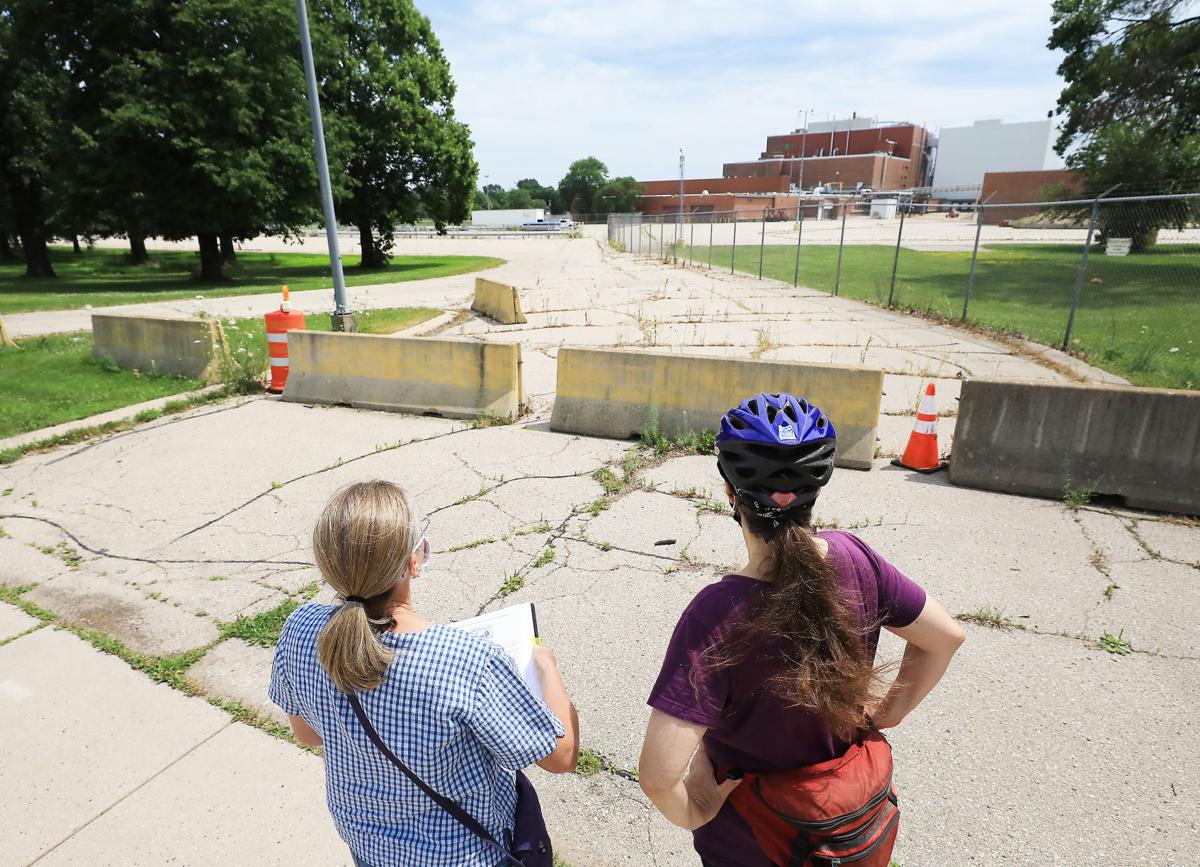
Beth Sluys, left, and Maria Powell see the north side of the site of the former Oscar Mayer plant along Aberg Opportunity. The North Side locals are among those highlighting issues about soil and groundwater contamination under the former industrial site, which is being targeted for a $300 million redevelopment.
Nearly 4 years and lots of meetings later on, her interest is tempered by what she’s found out about ecological hazards in and around the site.
” I thought it might be something actually terrific for the North Side,” she stated.
With city leaders poised to approve a redevelopment strategy that assures to bring thousands of new jobs and houses to the city’s North and East sides, issues over contamination from a century of industrial use, a lack of greenspace and disenchantment with the procedure has actually turned some people who desire to see the website redeveloped versus the existing vision.

Others fret about who will get stuck with the cost of cleanup, which former Mayor Paul Soglin approximated in 2016 might cost as much as $20 million.
The Midwest Environmental Justice Company last week asked the council to send out the strategy back for more work, pointing out spaces in the city’s knowledge of contamination and a lack of public awareness about those issues.
” Environmental justice, which requires addressing race and class disparities in direct exposures to pollution and meaningful engagement of those most affected, is not served by the existing strategy or the procedure that resulted in it,” said Maria Powell, executive director of the company she established 15 years ago to deal with pollution affecting subsistence anglers.
City officials are seeking to purchase 15 acres of the commercial site nearby to the North Transfer Point, above, for a City Transit bus storage and maintenance center.
However there have actually been lots of documented spills on the former Oscar Mayer site and surrounding residential or commercial properties within the preparation location.
An aerial photo of the Oscar Mayer plant in 1947.
The state Department of Natural Resources considers a lot of the spills remediated, while clean-up and monitoring continues on others. Yet neighborhood and environmental companies are just as worried about what isn’t known: How far underground chemical plumes have actually spread out and what other compounds may remain in the ground, left from a century of industrial activity, that included burning coal and manufacturing plastics and pesticides.
” This was a lot more than Weinerville,” stated Dolores Kester, a North Side resident who worked with an environmental law practice to compile a report on some of the recognized and possible contamination. “It’s a huge advancement from a century earlier when the Mayer bros came up here from Chicago. This community has actually known that.”
No due diligence?
Combined with the redevelopment strategy before the council is the city’s effort to purchase about 15 acres of the former Oscar Mayer site for a Metro Transit bus center.
Website examinations conducted for the current owners, a partnership of companies that concentrate on reselling previous factories, exposed soil and groundwater contaminated with trichloroethylene, an unpredictable natural compound called TCE that has actually been connected to kidney and liver illness, in addition to cancer.
That plan has actually triggered criticism from Ald.
” If the city is going to purchase this, there is an environmental liability,” Abbas said.
Abbas
Tom Lynch, the city’s director of transportation, expects to have something for the council to authorize this fall.
The Openness Project
With a degree in ecological sciences and experience working as a security officer on two Superfund cleanup sites, Sluys knew enough about brownfield redevelopment to presume there would be problems with the Oscar Mayer site.
” The plans are barreling right along,” Sluys stated.
The Madison City Council is set up to vote Tuesday on a plan to redevelop the location around the 72- acre industrial site.
When she inquired about contamination, Dolores Kester said city officials pointed her to the DNR reports, which the retired lawyer discovered incomprehensible.
” I’m not a hydrogeologist. I’m not an engineer,” Kester said. “I remain in a weird land … I require a map. I require a translator. I require a dictionary.”
So Kester employed Midwest Environmental Supporters to evaluate the website history and summarize the ecological threats “in plain English.”
The outcome– called “The Transparency Project”– is a 28- page report and interactive Google map she calls “a good start.”
” The issue is what is not in it,” Kester stated. “If it was a location where no spill happened, or nobody happened to observe, it hasn’t been evaluated. There are locations … where no screening has actually been done.”
Liability and leverage
The current owner of the 72- acre Oscar Mayer website, a partnership of Reich Brothers and Rabin Worldwide referred to as 910 Mayer LLC, is working to clean up three known spills, consisting of at the former Spice Room.
City authorities state they are devoted to additional screening, however do not have the authority to do so on personal property. Rabin did not deal with questions about the legal arrangement with Kraft Heinz, which city authorities have actually not seen.
” That’s something they’re absolutely not showing us,” stated Brynn Bemis, a hydrogeologist with the city’s Engineering Department.
A Rabin spokesperson said the company is “committed to working collaboratively with the WDNR to investigate and remediate the determined releases to safeguard human health and the environment.”
Meanwhile, the city has actually employed an environmental consultant and attorney to craft a purchase arrangement for the City Transit job that officials state will safeguard the city from liability for any extra contamination it finds.
The city has also received a $300,000 brownfield grant from the U.S. Environmental Protection Agency that Bemis stated might pay for extra research studies.
By buying the land the city would not necessarily be on the hook for cleanup, as the DNR might appoint that responsibility to the initial polluter. But typically those looking for to redevelop brownfields wind up doing the work, said Darsi Foss, administrator of the DNR’s environmental management division.
” It tends to work out, even if of individuals’s inspirations,” Foss said. “Oscar Mayer’s still around, but is Oscar going to transfer to the speed that the brand-new developer desires them to?”
While yielding the 910 Mayer contract “isn’t perfect,” Bemis stated moving on is the very best method to guarantee the contamination is tidied up.
” You first have a strategy, then the redevelopment and the clean-up happen at the exact same time,” Bemis stated. “Redevelopment– now you have take advantage of. That’s when the cleanup occurs.”
In a memo sent out to council members Friday, task supervisor Dan McAuliffe rejected any tip that the strategy recommends development without removal.
” There are laws that ensure properties are examined for prospective pollutants and that removal take place if necessary previous to new building and construction and profession of spaces,” McAuliffe wrote.
Mayor Satya Rhodes-Conway stated the Oscar Mayer website is “the most economical alternative” for a bus barn which the city “has a performance history of remediating properties for other uses.”
But Powell said the history of the site illustrates why the state’s environmental remediation rules– called NR 700 policies– are ineffective.
” Oscar Mayer and Kraft Heinz ran there for decades and there are still many open sites,” she said. “These activities ought to have been examined, tidied up, and closed by now. Plainly NR 700 is not working.”
Beth Sluys, who worked on two Superfund remediation sites, says contamination at the commercial website has tempered her enthusiasm for a redevelopment plan that could bring countless new houses and jobs to the location.
Unseen damage
Critics of the strategy stress that the contamination might have spread.
Powell stated TCE fumes coming through the Spice House flooring were determined at levels she has “never ever, ever seen before,” which she believes is indicator of a massive plume of contaminants.
” It’s got to be really bad,” Powell stated. “We require to understand where it ends.”
Bemis said personal wells formerly used by Oscar Mayer likely drew the solvents deep underground where it would not create a threat of leaking into basements. While solvent plumes can take a trip for miles, Bemis said there is no proof of the solvents coming up to a city well.
Abbas has actually asked for extra screening to see if impurities like TCE– but also fluorinated substances known as PFAS– might have moved from the Oscar Mayer site into areas slated for domestic development or nearby communities where residents frequently struggle with water in their basements.
” We understand the source is here,” Abbas said. “The thing we require to figure out is how far it went. … That’s why it is necessary for the city to step in and do detailed testing.”
While challengers say they still wish to see the Oscar Mayer site redeveloped, they want more public discussion before a plan is authorized with guarantees that taxpayers aren’t stuck with the bill while corporate polluters are let off the hook and designers reap the revenues.
” This is a genuine opportunity for the city,” Sluys stated. “However everything is colored by what we do not see under our feet.”
Through the years: Madison’s Oscar Mayer plant in images( tncms-asset) a363038 c-5c3d-11 e7-9201-00163 ec2aa77[11](/ tncms-asset)
Get local news delivered to your inbox!
More than 100 years back, Oscar Mayer bought a meat processing plant in Madison and began a long time relationship with the city, which for ma …

The 31- acre tract was leased for many years by Oscar Mayer and has actually been polluted by a minimum of two fuel oil spills and the storage of coal, however in recent years water has recovered low-lying areas where invasive cattails and reed canary yard are flourishing not far from a stand of old development oaks.

source https://jobsearchtips.net/ecological-contamination-concerns-taint-oscar-mayer-redevelopment-plan/


No comments:
Post a Comment