To hear President Donald Trump tell it, the coronavirus will quickly vanish, jobs are coming back, and Congress requires to let a $600 weekly welfare end July 31, which he calls a “disincentive to work.”
But even with some jobs lost to the pandemic beginning to return, over 30 million individuals are still receiving the joblessness support and some fear the president’s rosy assessment could leave them destitute if it disappears.
Depending upon the state they reside in, recipients might lose well over half of their income over night
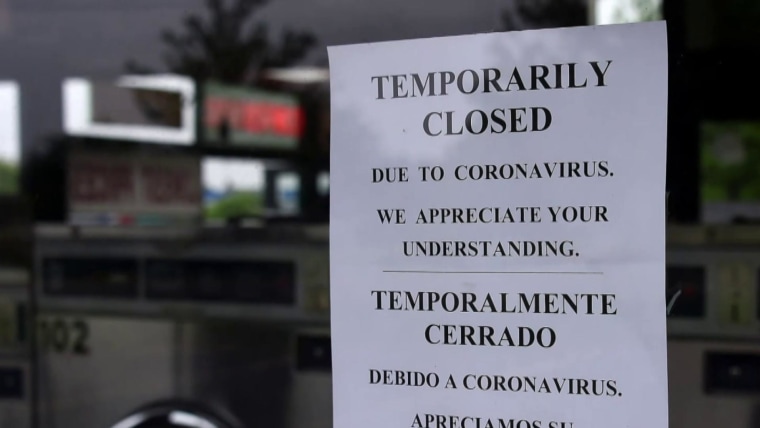
Katherine Henry, a 37- year old Massachusetts citizen who lost her task as a fitness instructor for an expert rugby group due to the pandemic, informed NBC News the weekly $600 payments have actually been a “lifesaver” up until now.
However with fitness centers and live sports amongst the markets hardest hit, and her wife’s food truck struggling to regain business, Henry’s been trying to find other jobs however states the scenario is bleak. She’s been writing and calling legislators asking to restore the $600 benefit.
” My industry is simply shuttered at this moment,” she said. “I ‘d have no difficulty operating at our local Starbucks, however they aren’t hiring. Republican politicians say it’s a reason not to return to work, however there isn’t any work.”
The advantage was consisted of in the CARES Act gone by Congress and signed into law by Trump in March when the economic destruction wrought by the pandemic ended up being clear.
However it’s now become the topic of an extreme partisan debate that remains in some methods a proxy battle over how each side views the state of the recovery.
Trump, indicating a net gain of 2.5 million jobs in May and 4.8 million in June, has actually called the economy a “rocket ship” and his advisers are promoting a “V-shaped healing” in which workers will have the ability to quickly go back to their jobs as the economy reopens.
” Today’s announcement shows that our economy is roaring back, it’s returning exceptionally strong” Trump stated after the June numbers came out.
To lots of Republicans, the $600 payments are merely too generous and will dissuade recipients from quickly going back to the workforce.
In particular, critics complain that the $600 weekly benefit means many low-wage workers are making more than what they were prior to the pandemic. The Congressional Spending Plan Office approximated that 5 out of 6 receivers would make more from unemployment than they might expect to make from work if the payments were extended.
Let our news meet your inbox. The news and stories that matters, delivered weekday early mornings.
Michael Simpson is one. The 45- year-old Delaware local was furloughed from his job at a ladies’s formal wear business in March when the pandemic struck. Now, in between state joblessness assistance and the $600 weekly federal help, he’s making $150 more per week than he did at his job.
” I can see the argument that you’re just soaking it up, that you’re making more money from unemployment than from working. Trust me, I ‘d much rather be working than sitting around doing absolutely nothing,” Simpson said.
Democrats point to a getting worse pandemic and dire long-lasting projections that suggest numerous Americans will be not able to safely go to work or find a brand-new job and will require more help to make lease and put food on their table.
” If we fail to renew the $600 weekly boost in UI [unemployment insurance], millions of American families will have their legs eliminated from beneath them at the worst possible time– in the middle of a pandemic when joblessness is higher than it’s been considering that the Great Anxiety,” Senate Minority Leader Chuck Schumer, D-N.Y., said last week.
Given the perseverance of the infection, financial experts are increasingly concerned about a “checkmark-shaped healing.” Because scenario, the economy would see a preliminary wave of task growth as organisations resume and adjust to the crisis, but millions would still be excluded of work once the wave declines. Current gains still aren’t near to surpassing the more than 20 million jobs lost in April. Even last month’s strong tasks report consisted of 588,000 brand-new layoffs that were permanent, rather than temporary furloughs.
The Federal Reserve jobs unemployment will stay over 9 percent at the end of the year, and that quote came before the recent rise of cases in states like Arizona, Texas, Florida, and California that has triggered officials to pause or roll back resuming strategies.
Fed Chairman Jay Powell and lots of economic experts have cautioned that a possible prolonged “second wave” could moisten the healing The current tasks report only covered the period approximately the week of June 12, prior to the latest rise in cases, which triggered analysts like banking giant Goldman Sachs to lower their development projections.
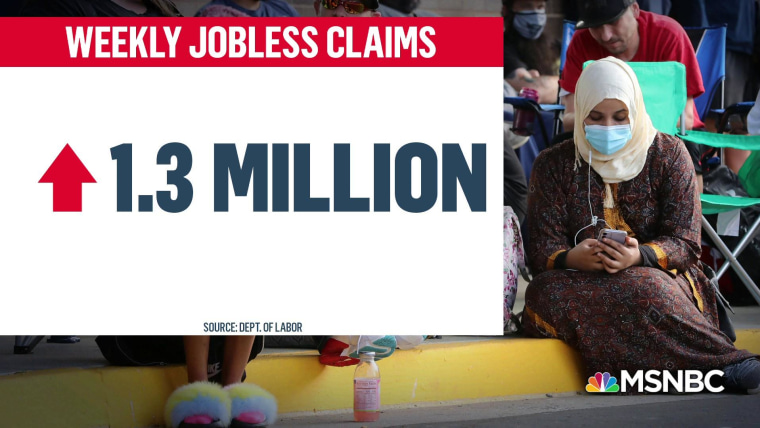
While some organisations are resuming, others have actually closed or laid off employees, perhaps permanently. Given that the tasks report, over 1.3 million individuals have submitted brand-new applications for unemployment benefits every single week, still far above typical levels. Small companies may likewise begin to tire federal loans and grants that were created to keep workers on payroll, potentially setting off a new age of layoffs.
Workers might deal with new headwinds in the fall. Numerous schools are not likely to return full-time, cutting off an important source of child care that will make it challenging for moms and dads to find and keep a task.
” We know the economy is not going to go back to complete capacity up until the virus is gone. There are going to be tasks that individuals merely can refrain from doing,” Martha Gimbel, supervisor of economic research at Schmidt Futures, said. “If we screw this up, it’s about whether or not individuals will have the ability to feed their kids.”
Trump in current days has demanded schools completely open, threatened to cut off funding to those that don’t, and criticized his own administration’s security guidelines as too “tough” and “very expensive.”
While Republicans and Democrats debate the very best course ahead, neither side denies that boosted unemployment benefits, in addition to other CARES Act arrangements like organisation loans and stimulus payments, have had an enormous effect on Americans’ livelihoods up until now. In numerous ways, they have actually protected households from a Fantastic Depression-level collapse.
Individual income really rose 10.5 percent in April as much of the nation was closed down to fight the pandemic, and Americans likewise handled to save 33 percent of their earnings, a rate far greater than regular.
The benefits were particularly valuable to lower earnings Americans: One study by Columbia University researchers credited the CARES Show keeping the poverty rate nearly the like it was before the pandemic, even as 10s of millions have actually been displaced of work.
However some organisations, which are needed to revive workers to meet the conditions of their own federal aid, have also complained that their workers are reluctant to return, offered the benefits. Republicans see this as an indication benefits have actually overshot the mark.
” Right now our policy is we’ll offer you $600 a week just if you don’t work, however if you do work, you do not get it,” Stephen Moore, a White House advisor, said. “That’s a dumb policy. Don’t pay people for not working.”
Instead, Moore prefers briefly suspending payroll taxes, which would increase earnings for employees and entrepreneur– however not the jobless.
Trump has actually likewise talked up the idea of cutting payroll taxes, in addition to a range of targeted breaks for various industries affected by the pandemic. Last week, he informed Fox Company News that while he is open to a brand-new round of stimulus payments too, he desired a “terrific incentive to work.”
In the Senate, McConnell has actually stated lawmakers should continue “appropriate” benefits for those who can’t work, however the $600 weekly payment was a “mistake” that motivated individuals to remain unemployed. Some GOP lawmakers have recommended legislation that would pay benefits to employees who go back to work.
Adding to the tension on the out of work: Other arrangements to safeguard them could be going out at the same time.
Millions of tenants are also protected from expulsion under the CARES Act, but that procedure is set to expire on July25 A recent analysis by Urban Footprint warns that without some government assistance, upwards of 7 million renters are susceptible to losing their house. Some similar measures at the state level are currently ending.
” It must be actually clear today that forcing individuals into homelessness is not in the general public interest or our health interest,” stated Shamus Roller, executive director of the National Housing Law Project.
source https://jobsearchtips.net/views-on-recovery-are-affecting-the-debate-over-extending-unemployment-benefits/


No comments:
Post a Comment