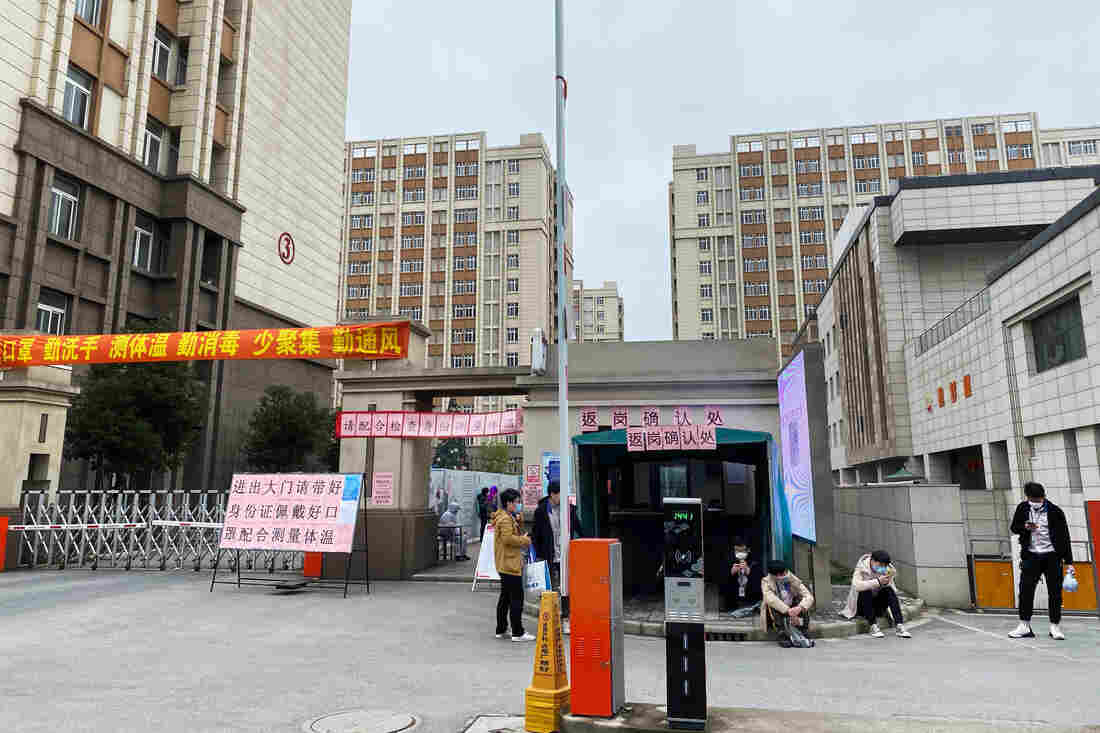
Employees wait outside the Foxconn employee dorms today in Kunshan. China’s factories are facing dire labor shortages and factory production lines are at a standstill.
Amy Cheng/NPR.
conceal caption
toggle caption
Amy Cheng/NPR.

Workers wait outside the Foxconn employee dorms this week in Kunshan. China’s factories are dealing with dire labor lacks and factory assembly line are at a standstill.
Amy Cheng/NPR.
More than a month and a half into the outbreak of a new coronavirus in China, the country’s economy is still mainly in lockdown mode, stalling an international manufacturing powerhouse at the heart of almost every commercial supply chain. As the crisis continues, companies huge and small are battling with the disruption the pneumonia-like health problem has caused, with impacts reaching around the world.

Dining establishments and shops have been forcibly shut, numerous with paper seals to prevent owners from covertly resuming.
” If this [outbreak] drags past March, that truly ends up being quite bad,” states Tom Rafferty, China research study head at the Economist Intelligence System.

Even more stressing have been the alarming labor scarcities.
In Kunshan, a city that is house to many migrant employees near Shanghai, labor lacks are glaringly evident.

Dining establishments and stores have actually been forcibly shut in Kunshan, lots of with paper seals to avoid owners from covertly resuming.
Amy Cheng/NPR.
hide caption
toggle caption
Amy Cheng/NPR.
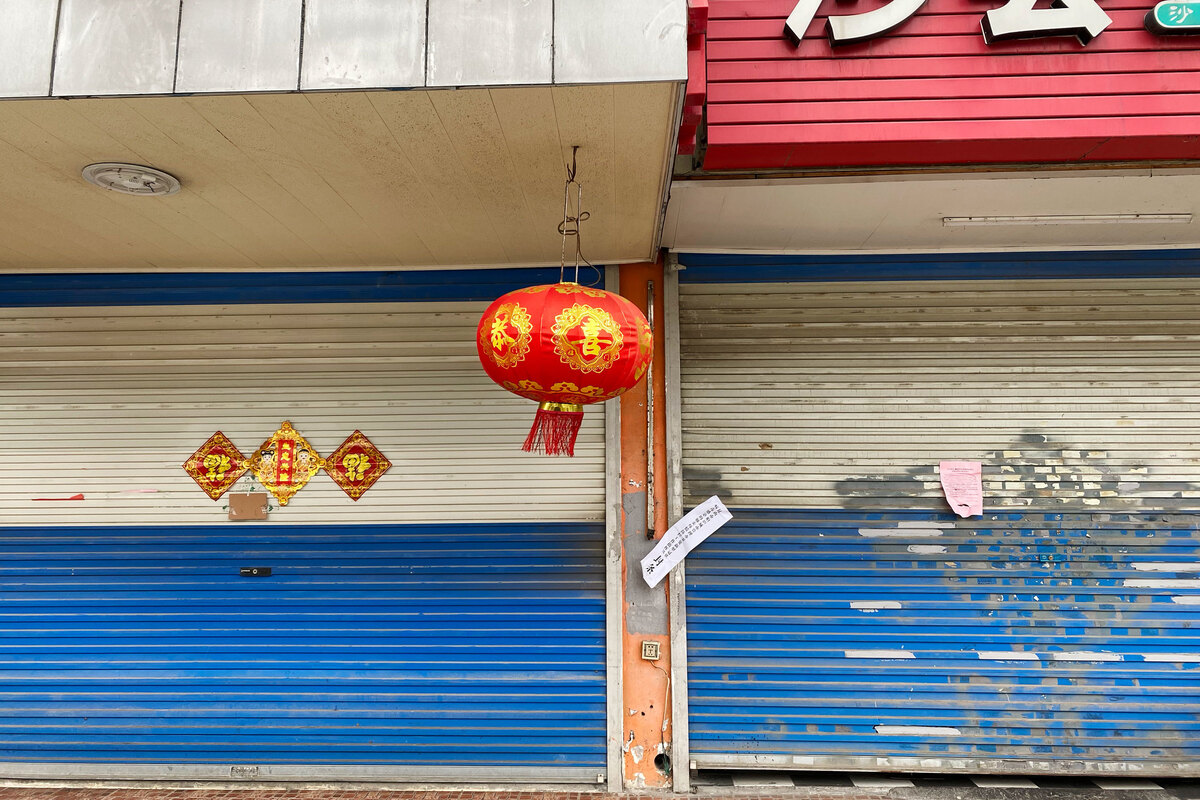
Dining establishments and stores have been by force shut in Kunshan, many with paper seals to avoid owners from discreetly reopening.
Amy Cheng/NPR.
Foxconn has actually decreased to publicize which plants it is slowly reopening.

In normal scenarios, these two Taiwan-based multinational electronic devices producers together employ more than 1 million individuals throughout China.
A skeleton group of “winter break” or hanjia employees was employed to work over the Lunar New Year vacation.
” We have some genuine disputes with labor supply right now … the problem is we don’t desire to come to work.

A Pegatron plant in Kunshan. Pegatron and Foxconn the 2 typically employ more than 1 million individuals throughout China.
Amy Cheng/NPR.
hide caption
toggle caption
Amy Cheng/NPR.

A Pegatron plant in Kunshan. Pegatron and Foxconn the 2 typically employ more than 1 million individuals across China.
Amy Cheng/NPR.
” One production line used to have 4,000 individuals.
Even a minor disruption in significant supply chains commanded by multinational manufacturers like Foxconn and Pegatron could create secondary hold-ups amongst their customers and suppliers, lasting for months in international sectors ranging from electronic devices to vehicles.

Foreign carmakers have struggled to reboot complete production.
A recent poll of American companies by Shanghai’s American Chamber of Commerce discovered 78%stated they didn’t have adequate personnel to resume complete production.

An entryway to a Foxconn employees’ dormitory. China’s factories typically increase production right after the Lunar New Year, however few employees have returned so far this year.
Amy Cheng/NPR.
conceal caption
toggle caption
Amy Cheng/NPR.

An entryway to a Foxconn workers’ dorm. China’s factories generally increase production right after the Lunar New Year, but couple of employees have actually returned so far this year.
Amy Cheng/NPR.
” The international implications are much bigger this time, due to the fact that China has a much larger share of international GDP and is much more incorporated into the international economy,” says the EIU’s Rafferty.
Unlike after the outbreak of swine flu a years back, Rafferty states China today does not have the luxury of double-digit GDP development to cushion the financial blow.
Labor shortages will likewise likely cascade throughout the electronic devices producing sector for months to come, with the burden falling on smaller firms rather than giants like Foxconn.
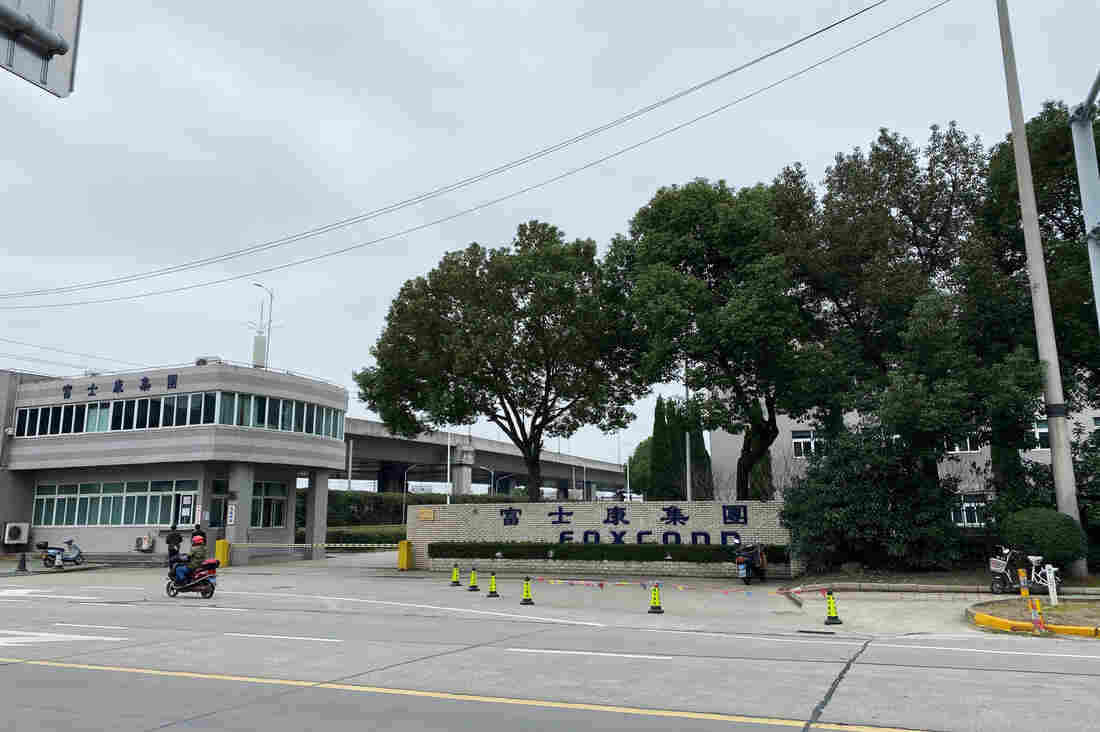
A Foxconn plant in Kunshan. Foxconn is among the titans of global electronic devices manufacturing and a key provider for companies like Apple.
Amy Cheng/NPR.
conceal caption
toggle caption
Amy Cheng/NPR.
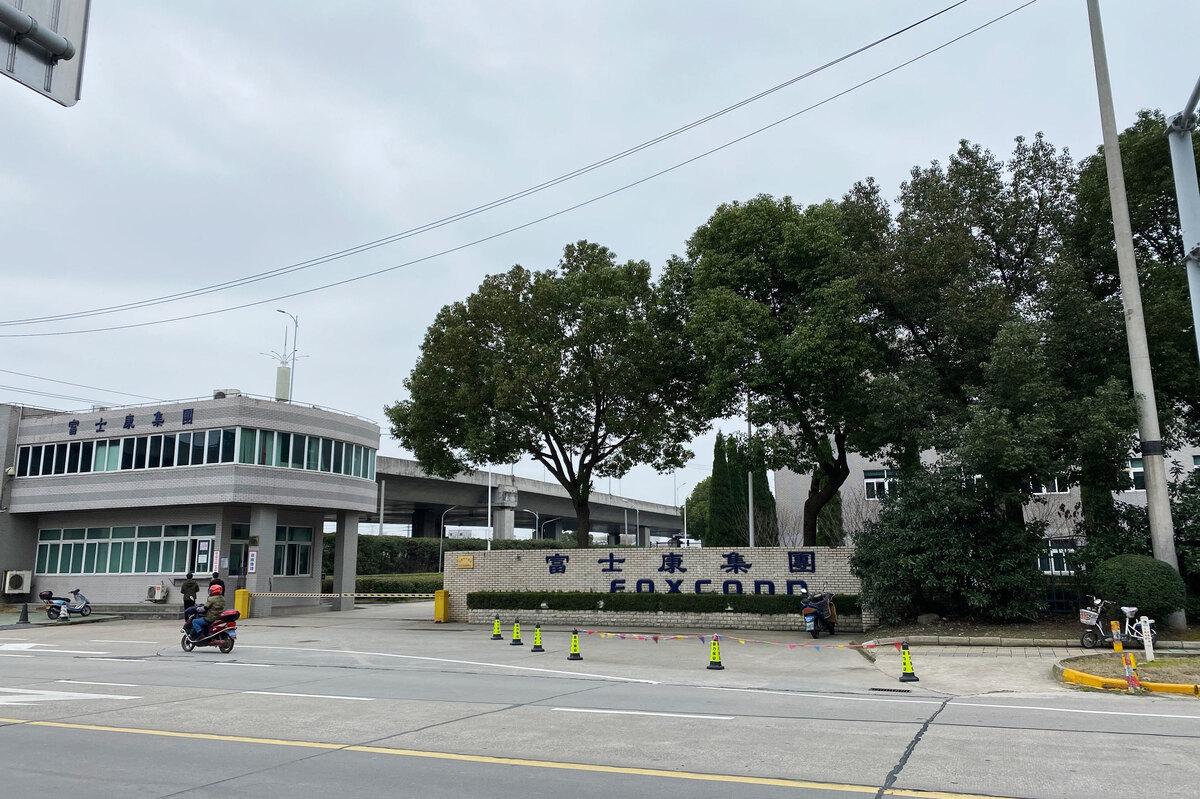
A Foxconn plant in Kunshan. Foxconn is one of the titans of international electronics making and a key provider for business like Apple.
Amy Cheng/NPR.
” Foxconn can generally get all the labor it needs in the next few months, however they might draw away the labor from smaller component makers, such that the Apples of the world might not necessarily have all the parts they want for Foxconn to assemble,” says Dan Wang, a technology expert at the research company Gavekal Dragonomics. “These supply chains are too well choreographed. Shortages are now going to be causing headaches for months.”
Foxconn is trying to get workers from uninfected locations back to its factories– but labor shortages will continue as regional authorities restrict the movement of migrant workers: “Even if you returned to the factory, you need to invest 14 days as quarantine,” states the female Foxconn employee. “We have some longtime employees that haven’t even returned.”
Instead, Pegatron and Foxconn have turned to another source of temporary labor: student workers, drawn from China’s thousands of vocational colleges. During vacations, they intern as poorly paid assembly workers.
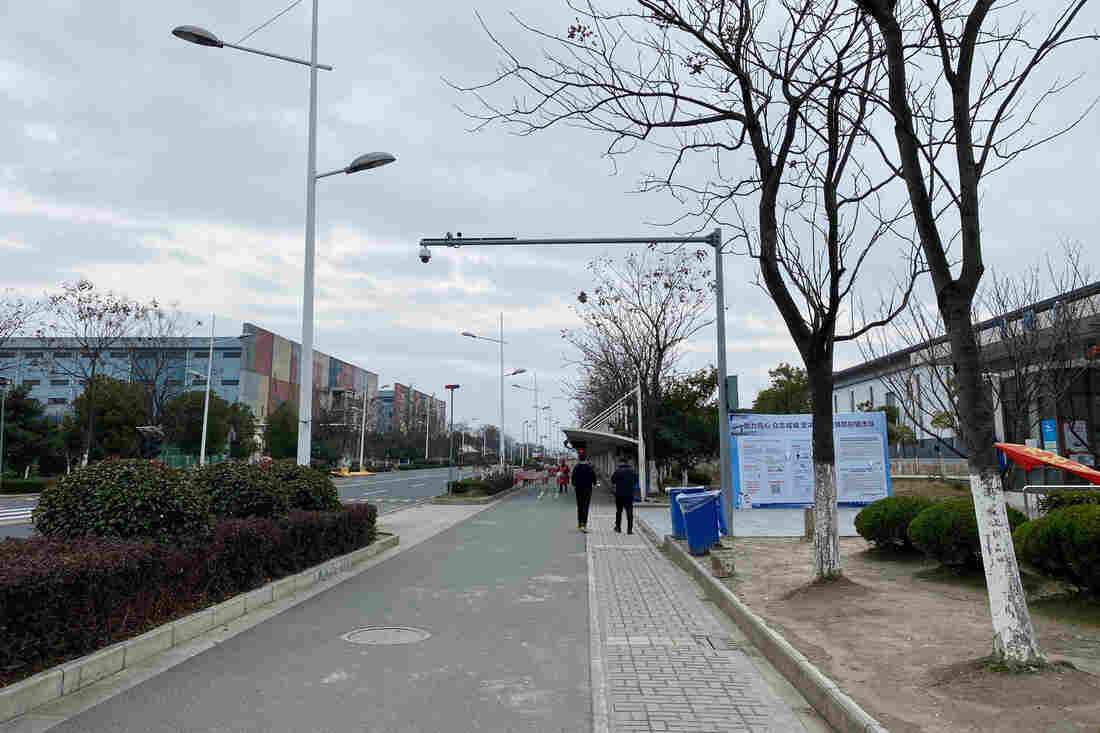
A view of Kunshan simply outside the Pegatron campus. China’s factories generally ramp up production right after the Lunar New Year, however this year, couple of workers have returned.
Amy Cheng/NPR.
hide caption
toggle caption
Amy Cheng/NPR.
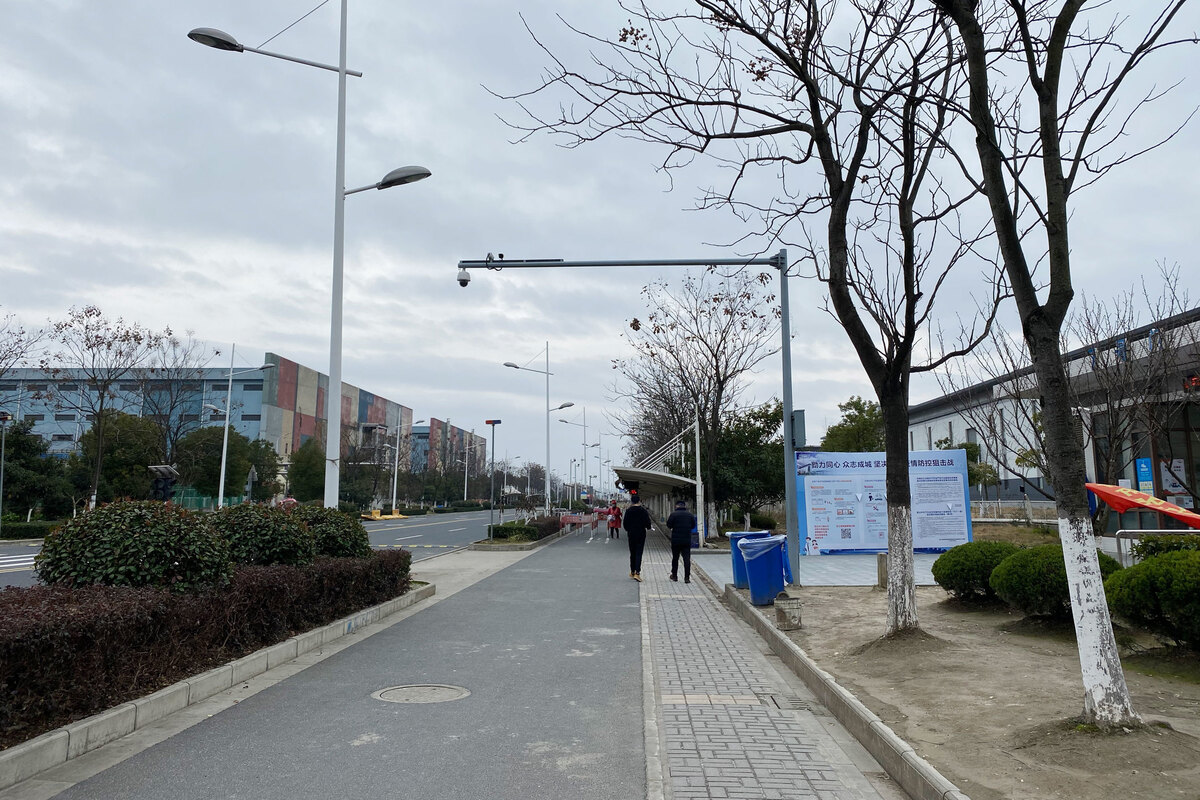
A view of Kunshan just outside the Pegatron school. China’s factories typically ramp up production right after the Lunar New Year, however this year, couple of workers have actually returned.
Amy Cheng/NPR.
However beginning recently, many trainee workers have been heading back home. In Kunshan, lots of them could be seen outside employee dorm rooms last week, waiting on transport to the regional high-speed train station.
” We have to do 2 weeks’ quarantine at home. If we leave now, the quarantine ends in the nick of time for us to begin the delayed start of the spring semester [in] early March,” states a previous Pegatron intern who participates in an occupation institute in Gansu province.
Foxconn and Pegatron did suspend production briefly in early February, prior to reopening parts of their Kunshan plants on Feb.10 The two firms run some of the biggest factories on the planet and local governments had an interest in getting them running again, at least in phases.
Smaller manufacturers are having a more difficult time.
An unusual earths magnet maker which typically utilizes some 300 in the city of Hangzhou, south of Kunshan, received permission to reopen from regional authorities recently. The factory was able to begin manufacturing again with a skeleton team after purchasing a big disinfectant maker. Uncommon earth magnets are utilized in everything from electronics to motors.
For any factory to resume now, “There’s documents that needs to be sent to the city government, which includes guaranteeing masks, some other protective equipment that workers can use, a disinfecting schedule,” states manager Jen Ambrose, among the couple of Americans who works at the magnet business.
In other cities, a few of the Chinese companies that purchase from or supply Ambrose’s company deal with different sets of health requirements and have not yet gotten approval to begin work.
The costs of labor shortages, broken supply chains and blanket restrictions on production are falling hardest on independently run small and medium-sized companies that, according to the nationwide data bureau, together use about 150 million people in China. A current joint study conducted by Beijing’s Tsinghua and Peking universities showed about 85%of these firms can endure just three months with no revenues prior to going bankrupt.
Particularly hard hit will be consumption-dependent sectors such as dining, tourist and retail, as citizens remove outdoors activities in favor of seclusion at home.
” All these kinds of activities have actually been hammered, definitely hammered,” states Louis Kuijs, head of Asia economics at consultancy Oxford Economics.
” Worth chain and supply chain disruptions have much bigger [impacts] than the China-U.S. trade friction,” Huang Qifan, the well-respected previous mayor of Chongqing, composed last week Huang cautioned the economic fallout from the state action to the outbreak will exceed and outlive that of the U.S.-China trade war.
” As soon as supply chains are transferred and changed,” he composed, “it is incredibly hard to get them back.”
%.
source https://jobsearchtips.net/the-extensive-ways-in-which-the-coronavirus-is-harming-global-company/


No comments:
Post a Comment